
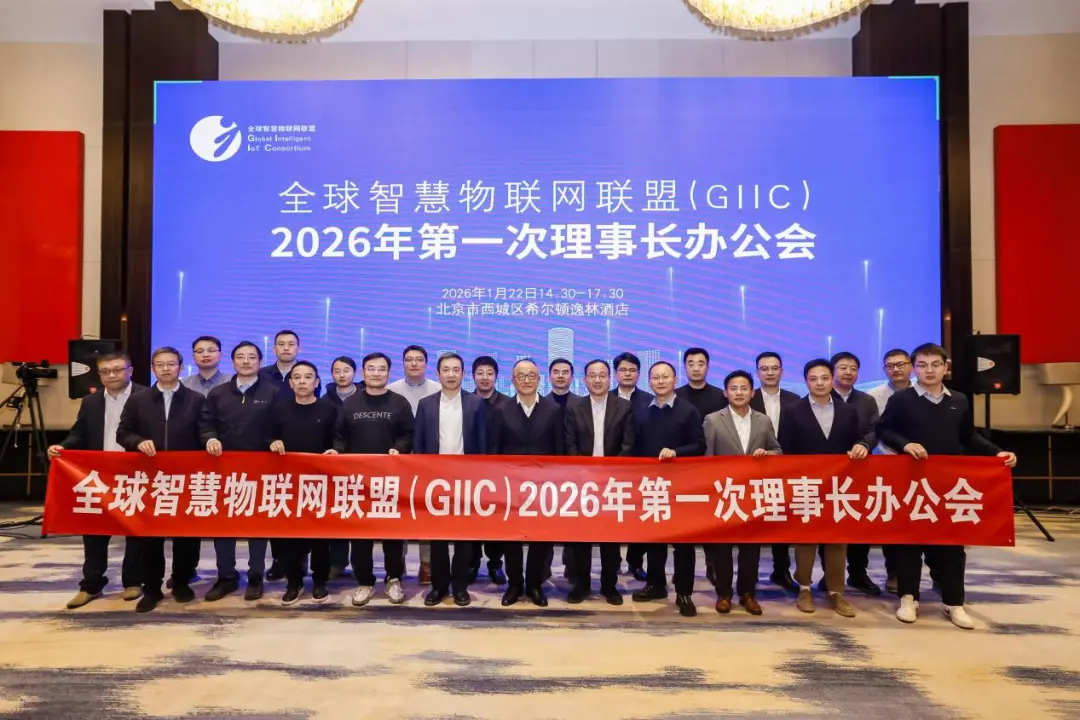
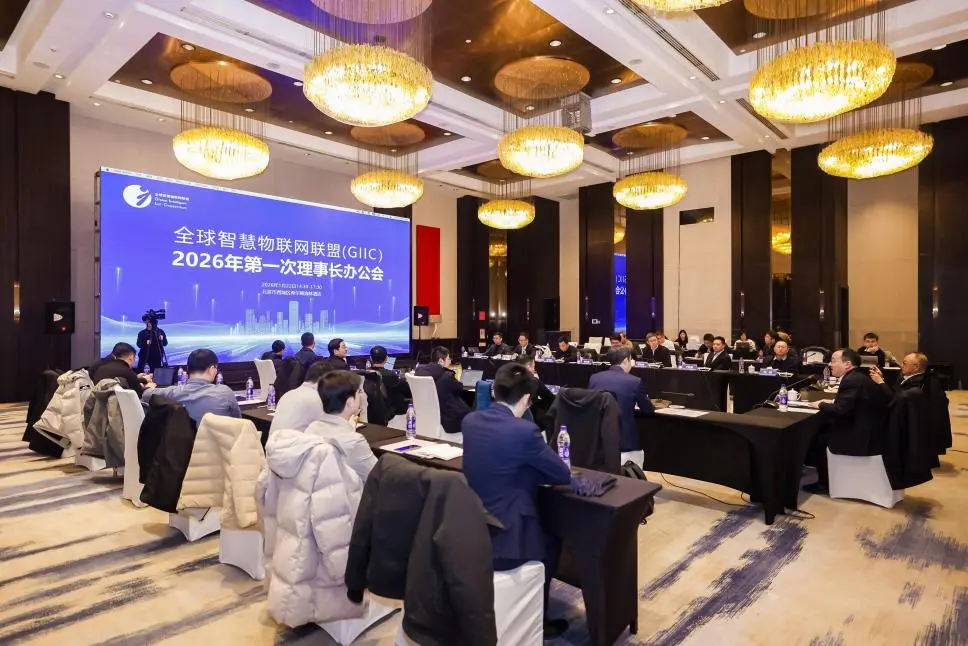
On the afternoon of January 22, 2026, the GIIC 2026 First Chairman's Office Meeting was successfully held in Beijing. GIIC Chairman Gao Tongqing, representatives from 15 vice-chairman units, and heads of alliance branches attended the meeting. Secretary-General Hu Caiyong presided over the meeting. The meeting focused on annual work exchanges and thematic discussions, aiming to summarize past achievements, plan the layout for 2026, further consolidate consensus through exchanges, form industrial synergy, and promote alliance development.
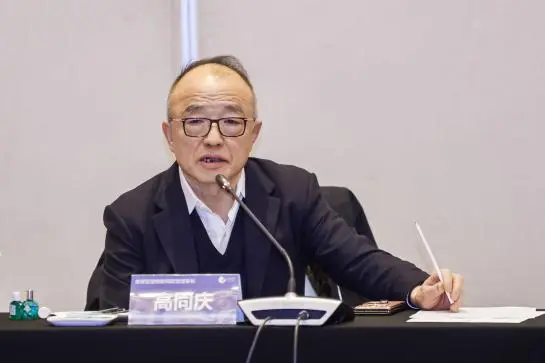
Gao Tongqing, Chairman of Global Intelligent Internet of Things Consortium (GIIC)
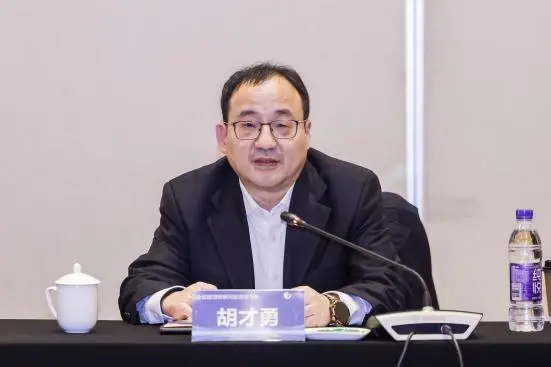
Secretary-General of the Global Intelligent Internet of Things Consortium, Hu Caiyong
GIIC Alliance 2025 Work Achievements Summary
He Xiaoyu, Deputy Secretary-General of GIIC Alliance, summarized the alliance's 2025 work achievements. In 2025, the alliance achieved leapfrog growth in membership, increasing from 149 to 344 organizations, attracting heavyweight industry-academia-research institutions including Midea, CESI (China Electronics Standardization Institute), BYD, and Tsinghua University. In terms of industrial empowerment, the alliance successively established the Telecommunications Committee, Construction Committee, OpenHarmony Security Committee, eSIM IoT Technology Committee, RISC-V Subcommittee, and Smart Home Working Committee. It released 6 unified interconnection standards for the OpenHarmony ecosystem, 2 OpenHarmony talent standards, as well as the "OpenHarmony Application Experience Blue Book 2025," "Industry OpenHarmony Terminal Development Blue Book 2025," and "OpenHarmony Ecosystem Talent White Paper 2025." The alliance also promoted the evaluation of OpenHarmony ecosystem products, including evaluations of 15 OpenHarmony ecosystem products and 83 OpenHarmony SDKs. Furthermore, the alliance established strategic partnerships with multiple global and national industrial organizations and facilitated cooperation with various city governments. In brand activities, the alliance successfully created flagship events including the OpenHarmony Ecosystem Conference and OpenHarmony Talent Conference, enhancing the alliance's brand influence.
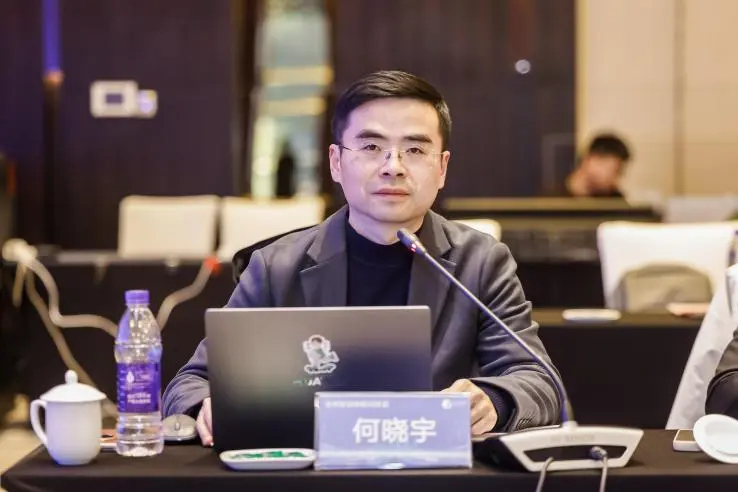
Deputy Secretary-General of the Global Intelligent Internet of Things Consortium, He Xiaoyu
Subsequently, representatives from the OpenHarmony Ecosystem Promotion Committee, IoT Promotion Committee, and Smart Home Working Committee respectively introduced the work of their respective branches.
OpenHarmony Ecosystem Promotion Committee Work Introduction
An Shuang, Executive Secretary of the OpenHarmony Ecosystem Promotion Committee, stated in her introduction that the OpenHarmony Promotion Committee actively integrated government and enterprise resources, establishing OpenHarmony Ecosystem Innovation Centers in Shenzhen, Wuhan, Changsha, and Chengdu in 2025, with strong support from local governments. The innovation centers received nearly 30,000 visitors throughout the year, with visiting leaders covering 28 provinces and municipalities. Additionally, nearly 60 city promotion events, exhibitions, and industry-specific activities were organized, extensively linking alliance ecosystem resources and enhancing alliance influence. In 2026, the OpenHarmony Ecosystem Promotion Committee will also focus on brand marketing, OpenHarmony talent development, standard certification, and industry expansion to solidly consolidate the foundation for ecosystem development and drive high-quality alliance development and OpenHarmony ecosystem prosperity.
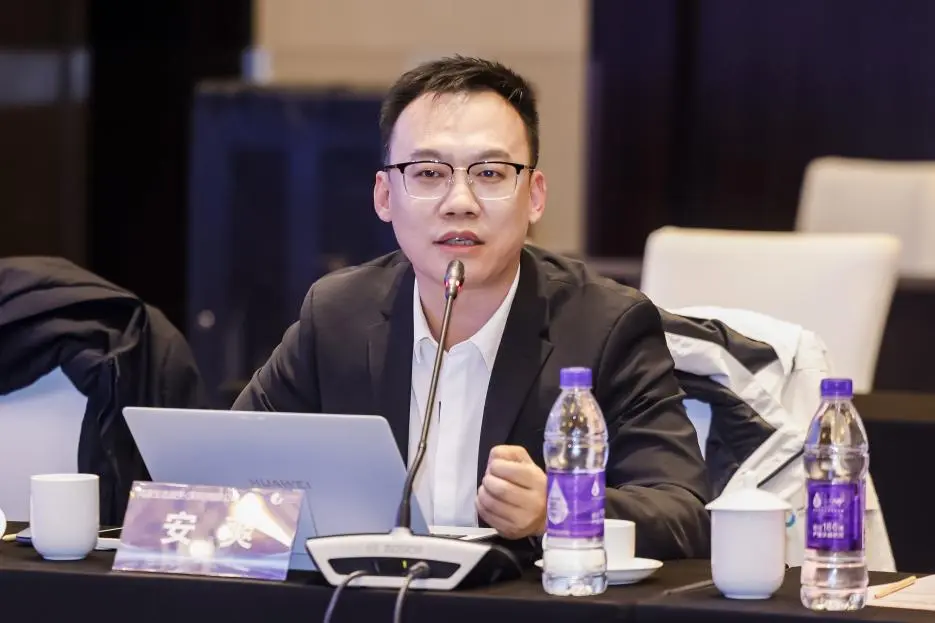
An Shuang, Executive Secretary of OpenHarmony Ecosystem Promotion Committee
IoT Industry and Standards Promotion Committee Work Introduction
Tian Yunlong, Deputy General Manager of Haier Group's Three-Winged Bird, representing the IoT Industry and Standards Promotion Committee, stated that in 2025, the eSIM IoT Technology Committee was initially established, conducting surveys on industry needs and pain points, clarifying standards and technical frameworks, and initiating preparations for scenario pilots including connected vehicles. The Urban IoT Perception Technology Center Committee focused on standard development and scenario deployment, currently collecting industry cases and advancing preliminary work for standard approval. The Smart Building Committee has initially completed organizational framework preparations and is currently connecting with enterprises and expert resources in relevant fields. Meanwhile, the Promotion Committee is also sorting through standard requirements for the entire IoT end-pipe-cloud process, providing technical support for the construction of standard systems in eSIM and IoT perception fields.
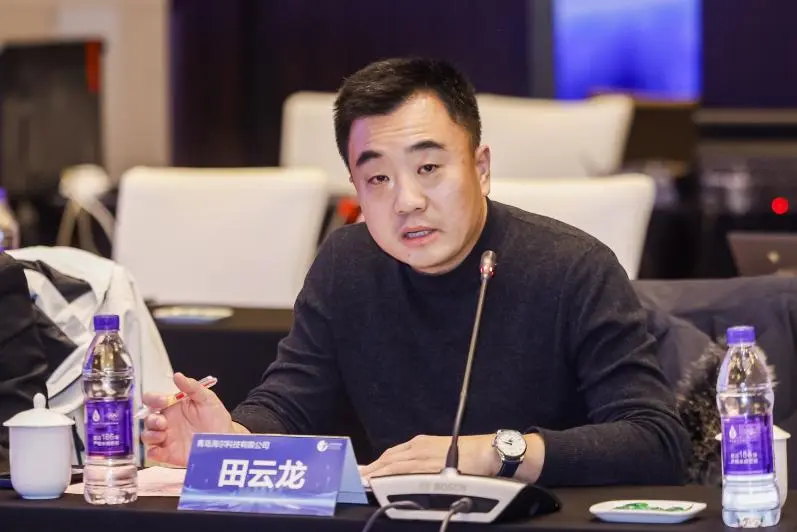
Tian Yunlong, General Manager of Haier Smart Home Technology Ecosystem Platform
Smart Home Working Committee Work Report
Li Hongwei from China Household Electrical Appliances Research Institute, introducing the Smart Home Working Committee's work, stated that since its official establishment on October 24, 2025, the Li Hongwei from China Household Electrical Appliances Research Institute, introducing the Smart Home Working Committee's work, stated that since its official establishment on October 24, 2025, the Working Committee has rapidly initiated operations with the support of the alliance. It released the "Smart Home Industry Development White Paper" and launched four standards for smart home unified interconnection (interface, thing model, testing, and security). Additionally, it plans to announce standards and innovative solutions in the first half of 2026 to demonstrate the application effectiveness of smart home unified interconnection standards, and release an industry white paper in the second half of the year to further promote the development of the smart home industry.
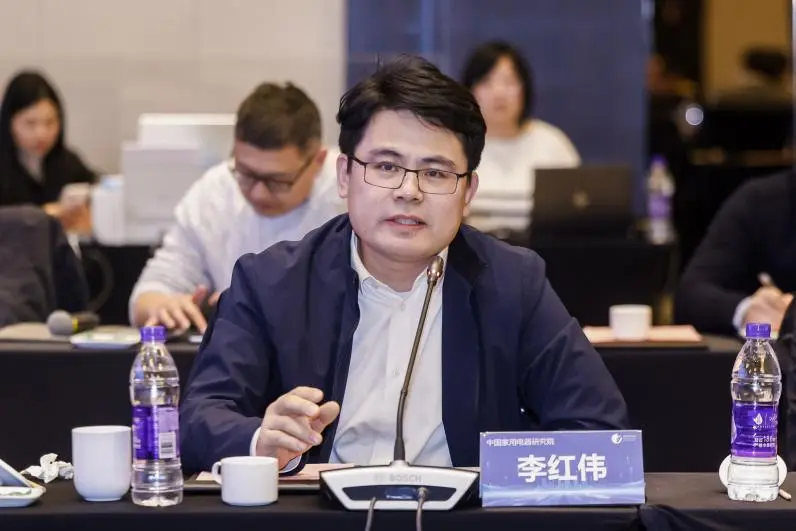
Li Hongwei, Chief Engineer of Testing Institute, China Household Electrical Appliances Research Institute
Contributing Ideas and Suggestions for Alliance Development
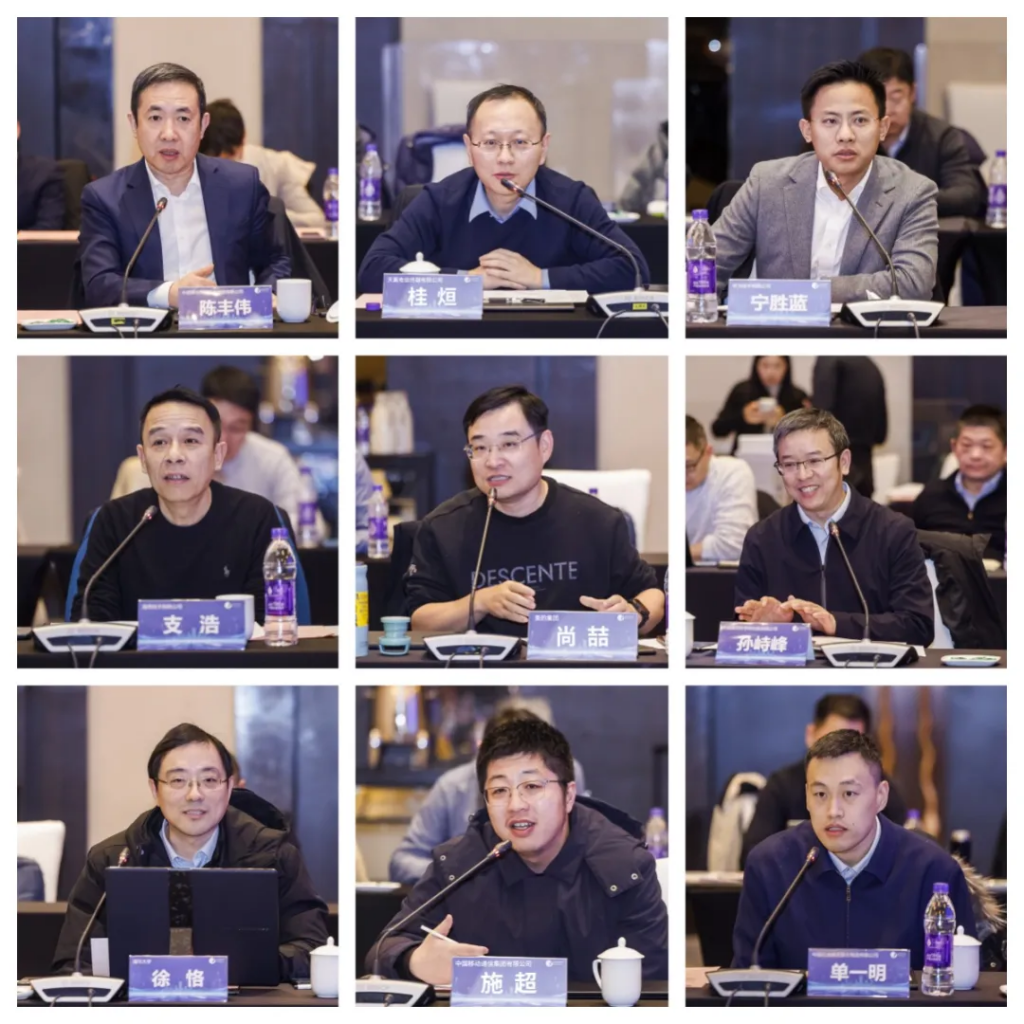
At the meeting, participants not only discussed the alliance's 2026 work plan but also engaged in in-depth discussions on multiple alliance topics, primarily focusing on the functions and composition of the Strategic Advisory Committee, cooperation with local governments and industry organizations, overseas expansion strategies for the alliance and its members, and alliance institutional development.
Participants unanimously agreed on the necessity of top-level design for the alliance's construction and development, leveraging institutions such as the Strategic Advisory Committee to provide strategic guidance. Regarding cooperation with local governments, discussions focused on how to promote OpenHarmony ecosystem development, with suggestions proposed for building closer collaborative relationships with industry organizations. For overseas expansion strategies, recommendations included establishing overseas branches, advancing preliminary industrial work, and strengthening international cooperation. In terms of alliance institutional development, emphasis was placed on the importance of improving alliance systems, particularly intellectual property policies and standard coordination mechanisms. Additionally, participants offered numerous constructive suggestions and opinions on enhancing alliance operational efficiency, strengthening collaborative cooperation among members, and advancing standards and certification work.
Chairman's Summary and Recommendations
In his meeting summary, Chairman Gao Tongqing emphasized the alliance's responsibilities and mission in serving members, serving the industry, and serving the nation, expressing the vision of building the alliance into a "source of standards, field for industrial application, important contributor to national standards, and fueling station for Chinese products going global." He also put forward specific requirements and suggestions for the work in 2026.
- Strategic Committee: Establish a strategic committee, inviting academicians and industry experts to provide strategic guidance for the alliance, ensuring the scientific rigor and forward-looking nature of decision-making.
- Institutional Development and Operational Efficiency: Improve alliance systems, particularly intellectual property policies and standard coordination mechanisms; enhance alliance operational efficiency; ensure effective work advancement; and avoid resource waste, internal friction, and formalism.
- Standards and Testing: Establish a Standards Coordination Working Group to unify standards, ensure the authority and influence of alliance standards, and promote the internationalization of standards.
- Platform Promotion: Leverage the alliance platform to facilitate cooperation among members, share resources, and enhance the alliance's attractiveness and value. Establish and publicize benchmark projects, promote alliance achievements through various occasions, and elevate alliance influence.
- International Cooperation: Strengthen cooperation with international organizations, starting from Southeast Asia, promote collaboration between alliance members and external partners, and enhance the alliance's international standing.
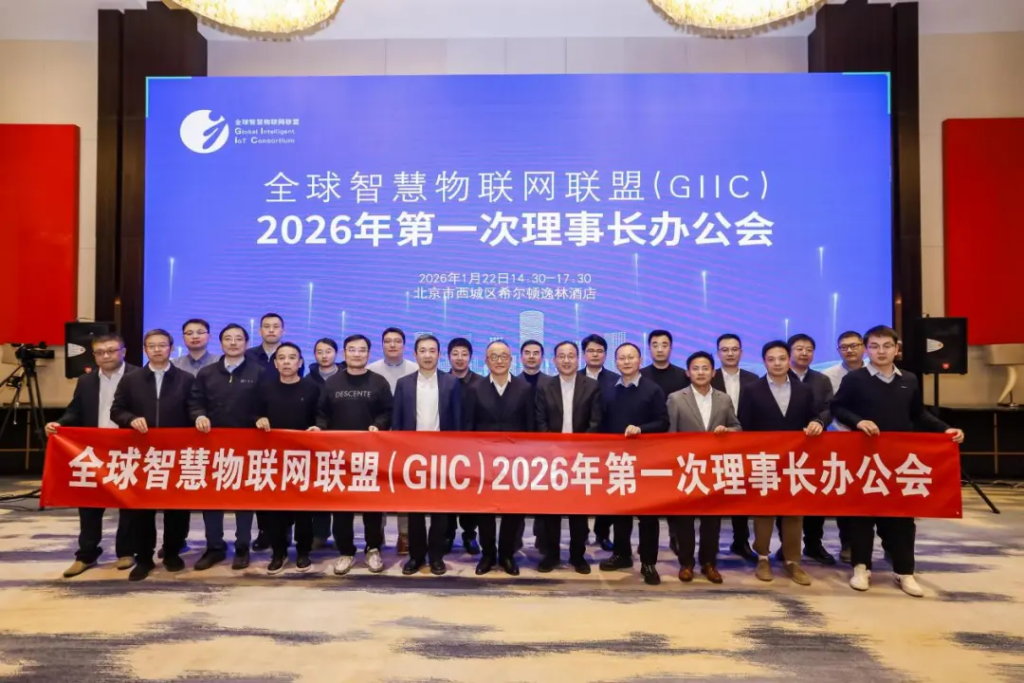
The successful convening of this meeting has clarified the direction for GIIC's 2026 work, identified key tasks and action plans, and created a strong start for the new year's endeavors.