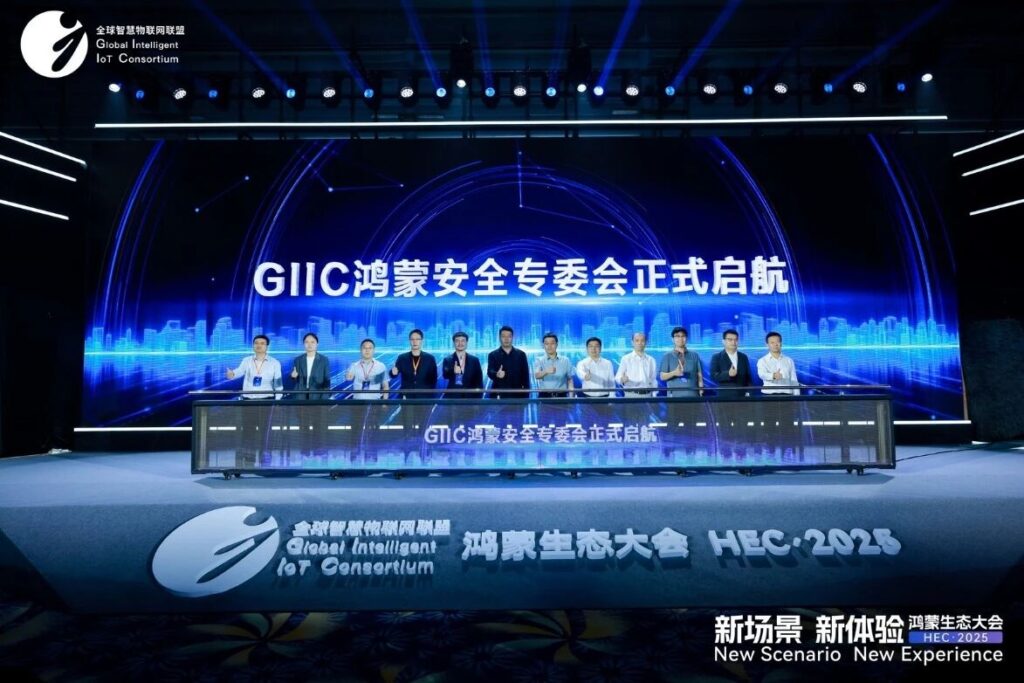
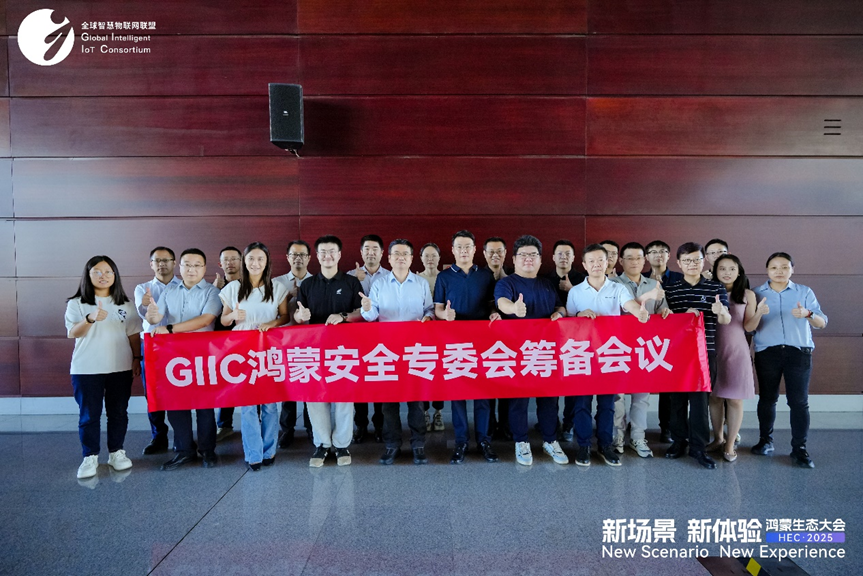
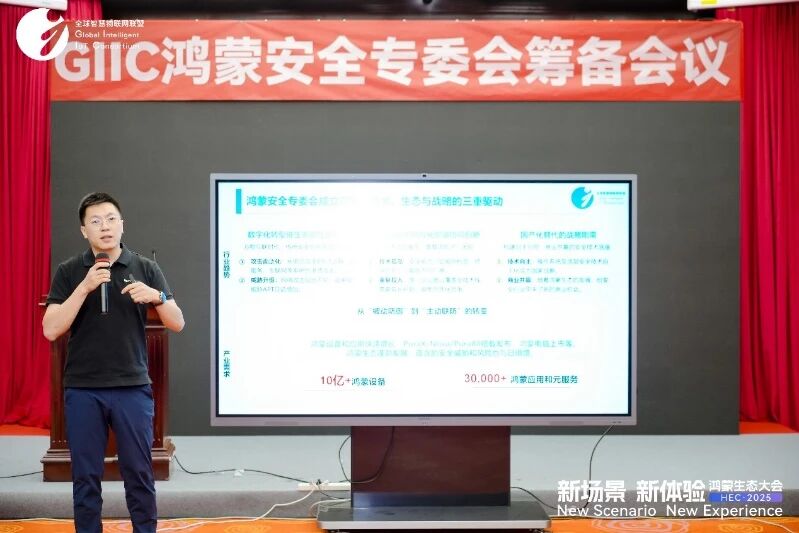
On the afternoon of August 29, 2025, the preparation meeting for the Harmony Security Special Committee (hereinafter referred to as the Harmony Security Committee) under the GIIC Harmony Ecosystem Promotion Committee was grandly held at the Shenzhen Convention and Exhibition Center. The successful convening of the meeting marked the official launch of the Harmony Security Committee.
The Harmony Security Committee is a sub-organization of the Harmony Ecosystem Promotion Committee, with the goal of establishing a tightly coordinated security collaboration platform to implement the industrial division of labor for Harmony security. It aims to fully integrate existing security industry ecosystem resources and ensure the security of the Harmony ecosystem through "platform + capability," promoting the success of partners' businesses and achieving coordinated development and win-win outcomes.
A total of 11 founding units and 25 representatives participated in this meeting, including (in no particular order) Antiy Mobile Security, Qi Anxin NetSun Information Technology (Beijing) Co., Ltd., Huawei Technologies Co., Ltd., SoftPower Information Technology (Group) Co., Ltd., Microstep Online Co., Ltd., AsiaInfo Security Technology Co., Ltd., Shanghai Douxiang Information Technology Co., Ltd., China Academy of Information and Communications Technology, Ministry of Industry and Information Technology's Fifth Research Institute, Beijing University of Posts and Telecommunications, and Lanzhou University. Representatives from these units gathered to jointly plan the development blueprint and implementation path for the Harmony security ecosystem.
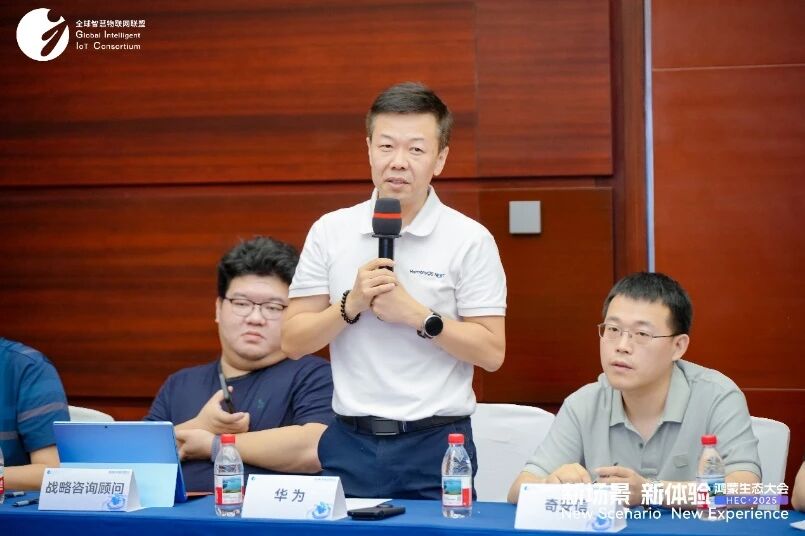
The meeting was opened with a speech by Tan Jing from Huawei Terminal, who first thanked the founding units for jointly initiating the Harmony Security Committee and the industry peers for gathering to discuss the ecological development of Harmony security. Tan Jing pointed out that the core goal of the committee is to ensure the safety of Harmony users and to achieve sustainable success for the Harmony security system in the commercialization process. System manufacturers, security companies, universities, industry organizations, and security communities, as ecosystem partners, need to form strategic synergy and jointly contribute to achieving the committee's strategic goals. The establishment of the Harmony Security Committee is like sowing a seed full of hope in the soil of Harmony security. All members will join hands to make it take root, sprout, and flourish.
Next, Wang Yong from the committee's preparatory execution team reported on the "Draft Operation System of the Committee," which includes aspects such as work objectives, business scope, work responsibilities, organizational structure, member management, meeting management, decision-making mechanisms, and business and organizational management. Pan Xuanchen from Antiy proposed constructive suggestions on the committee's organizational design and operation system. After full deliberation by the attending members, the "Draft Work System of the Committee" was passed by a show of hands and submitted to the alliance's board of directors for review and filing.
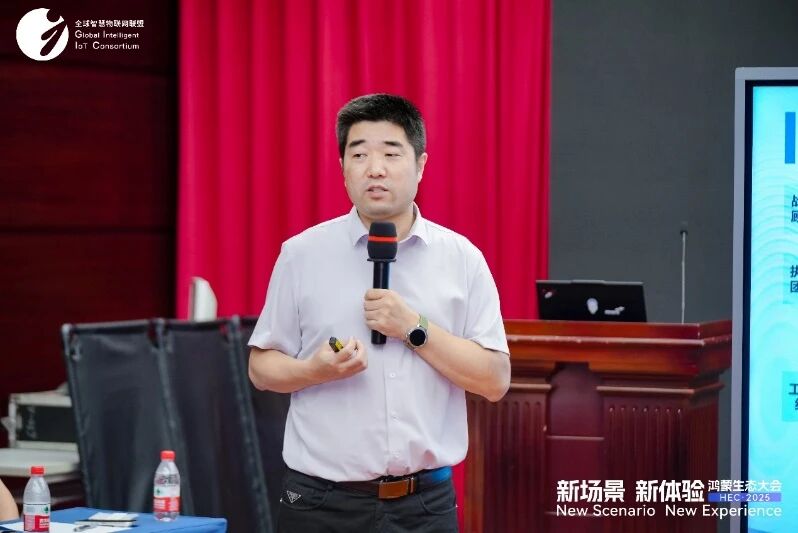
The meeting focused on discussing the draft work plan of the Harmony Security Committee, an agenda led by Liu Yuanzhang from Huawei Terminal. The business directions of the Harmony Security Committee were introduced one by one at the meeting, including technological innovation and achievement incubation, joint prevention of threats and vulnerabilities, co-construction of security solutions, and policy support and regulation formulation. These topics sparked lively discussions among the attending experts.
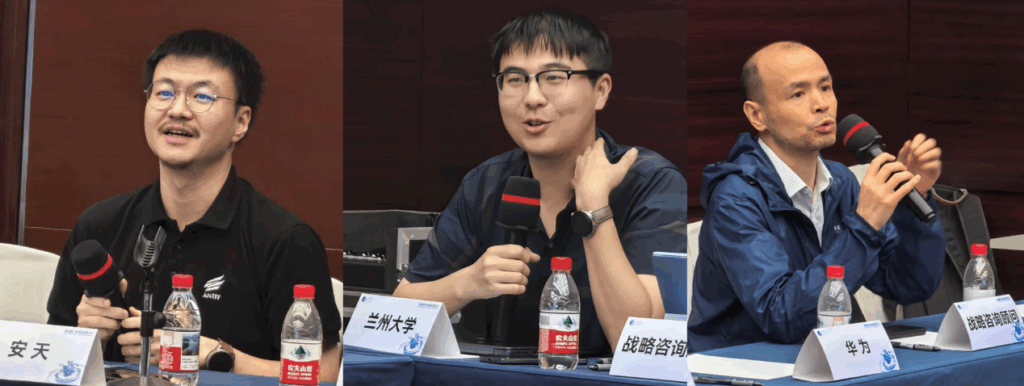
Regarding the business directions of the Harmony Security Committee, Liu Xin from Lanzhou University pointed out that universities' deep involvement in technological innovation requires the committee to provide necessary data openness mechanisms from manufacturers. Li Qi from Tsinghua University noted that for the 1+8+N scenario, single-point technology cannot solve security issues. There is a need for a systematic organize of the security panorama and identification of technical points that require collaborative research with partners.
Jin Zhihui from AsiaInfo Security and Wang Zhenwei from Qi Anxin suggested that the committee should build a threat sample sharing platform, with a contribution and reward mechanism designed to consider the commercial interests of various manufacturers. Zhao Boxuan from Microstep Online hoped that the committee would establish intelligence entry points for manufacturers and individuals and provide incentives and technical feedback to intelligence providers.
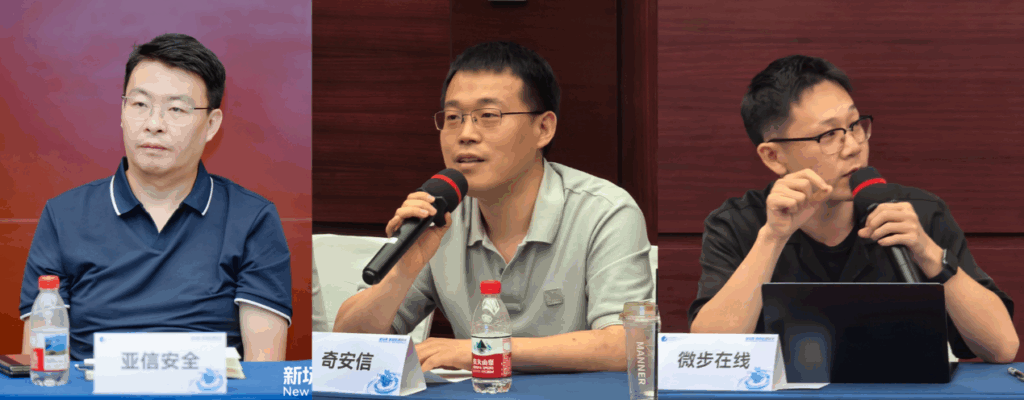
Pu Xin from AsiaInfo Security pointed out that HAPP and SUVP are necessary and that successful experiences from existing system manufacturers should be draw on. Proactive disclosure and defense can help enterprises foresee and prevent security threats. Wang Zhenwei from Qi Anxin proposed that security capabilities should be integrated into Kits to avoid instability caused by the integration of multiple heterogeneous products.

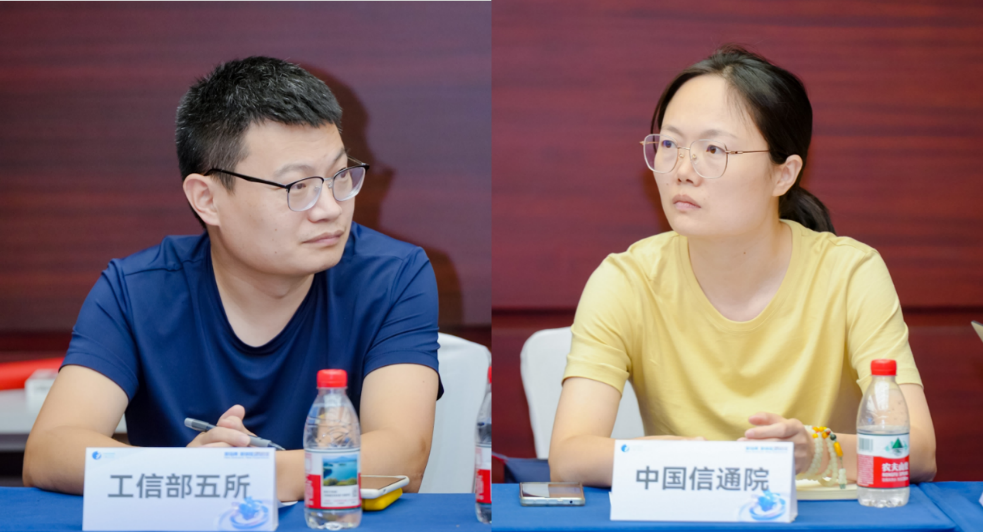
Liu Beishui from the Ministry of Industry and Information Technology's Fifth Research Institute believed that the formulation of security standards and regulations could be advanced to address urgent needs and issues. Meanwhile, the combing of the technical framework could help committee members find their ecological positions and promote industrial collaboration. Wang Yanhong from the China Academy of Information and Communications Technology noted the particularities of Harmony security and suggested that standards and regulations could be organized and compiled through the committee format.
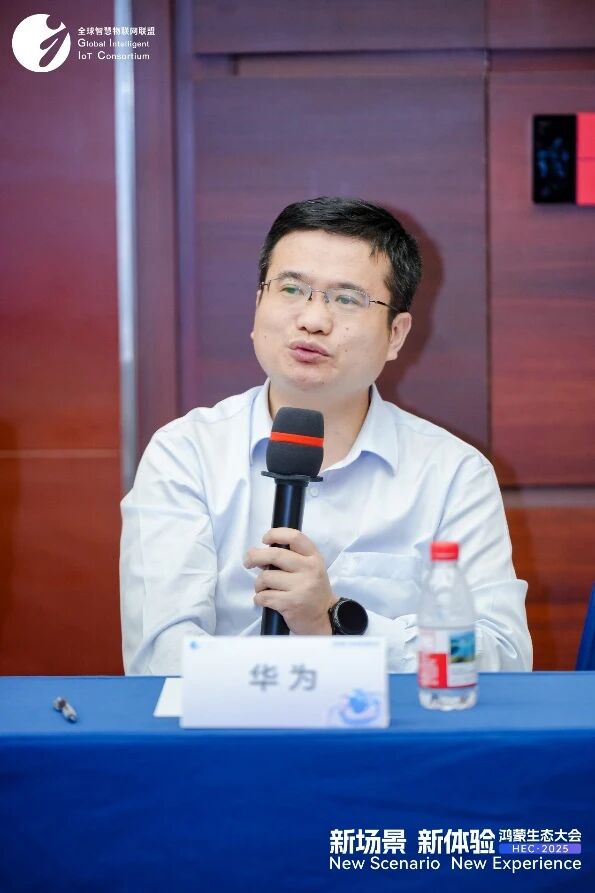
The meeting was concluded with closing remarks by Yang Kaifeng from Huawei Terminal. He once again thanked the Harmony security partners who attended the preparatory meeting and hoped that the committee would adopt a dual-driven approach of technology and industrial demand. He suggested that future work should include more intensive discussions and exchanges to accumulate information,Build industry consensus, and jointly build the brilliance of the Harmony industry.
The successful convening of this preparatory meeting for the Harmony Security Committee gathered industry consensus and laid a solid foundation for the committee's future work.